
At the end of July 2021, a Swinburne study, Medicinal Cannabis Detectability Trial, was heralded in a media release by the Victorian Minister of Road Safety, described as, “A study … to determine the effectiveness of the current roadside screening devices in detecting medicinal cannabis products and to improve understanding of whether different medicinal cannabis products and dosages affect roadside drug test results”. The study was provided to the Victorian Government in July 2022.

In late 2022, Legalise Cannabis Victoria parliamentarians, David Ettershank and Rachel Payne, became aware of the study and asked the Premier for a copy of the Report. They were rightfully outraged when a heavily redacted version was provided to them. From the pattern of redactions, the Victorian Government did not want anyone to know:
- the identity of the research institution (Swinburne University of Technology);
- the names of the researchers (Amie Hayley, Thomas Arkell, Luke Downey, Brooke Manning and Edward Ogden);
- the type of drug screening device used by the Victoria Police (Securetec DrugWipe Twin II);
- or the arbitrary oral-fluid THC* concentration used by the Victorian Institute of Forensic Medicine to confirm a THC-positive case (13 ng/mL).
Of even greater concern is the fact that the Victorian Government did not want the reader to see the evidence that the Securetec DrugWipe screener is hopeless at detecting THC in oral fluid, even soon after the use of THC-positive medicinal cannabis (MC). This failure to reliably detect THC contradicts the ridiculous claim by Victoria Police that they will inevitably catch cannabis-using drivers for up to 24 hours after use.
The unpublished Swinburne experiment involved 40 subjects who used their normal dose of THC-positive MC, and were then tested for the presence of THC in oral fluid by the Securetec DrugWipe screener at I, 2, 4 and 6 hours after use. From accidentally unredacted parts of the study it can be concluded:
The non-detection rate for THC was:
- 40% after 1 hour;
- 65% after 2 hours;
- 70% after 3 hours;
- and 77% after 6 hours.
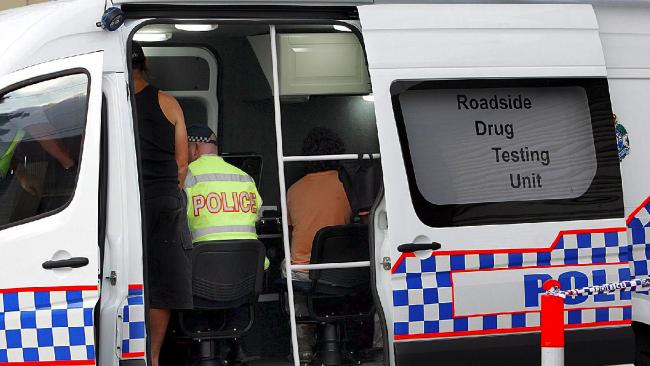
The fact that most THC-positive drivers (whether medicinal or recreational users) will get away with it, even if tested quite soon after using, seriously reduces any effectiveness of Australia’s roadside drug testing (RDT) programs. The censored Swinburne study is not the only one to demonstrate the shoddiness of the Securetec DrugWipe screening device in relation to the detection of THC. Eight other studies that do so were identified in a review paper, Detection of Cannabinoids in Oral Fluid Specimens as the Preferred Biological Matrix for a Point-of-Care Biosensor Diagnostic Device, from 2024.
The police use of roadside drug tests to detect cannabis (THC) in oral fluid is an egregious example of gadget-driven policing. It is well known that the presence of THC in oral fluid has little to do with impairment. RDT is grossly unjust in the case of the recreational use of cannabis and just crazy in the case of medicinal use. Road safety has become an arm of the war on drugs.
As well as being grossly unjust, the police use of drug screeners in RDT is a haphazard means of detecting the presence of THC—as discovered in the censored Swinburne study. The researchers were banned by the Victorian Government from publishing their results in a peer-reviewed journal as they show how bad the screeners are at detecting THC. That is something that the manufacturers and the Victoria Police would prefer to keep secret.
Adapted from an email from Dr Michael White, School of Psychology, College of Education, Behavioural and Social Sciences, Adelaide University (27 July, 2026).
*THC refers to metabolites of delta-9 tetrahydrocannabinol which can remain in the body for months
